
During my MBA, in the “Kamchatka Module” we dug into Georgy Shchedrovitsky’s framework called Organizational‑Managerial Thinking. To keep sharpening that mindset, we launched the K2 Club, made up mostly of fellow alumni.
Inside the club we’ve split into a handful of focus groups: power&energy, health, digital, public strategy and a few more. The setup is three or four off‑site sessions a year, each one three days of intense, collaborative work. At those meet‑ups, the method’s experts Andrey Evgenievich Volkov and Pavel Brunovich Mrdulyash guide us through the process. Between sessions, each group keeps working together regularly. Here’s a quick recap of what our “Digital” group has been working on.

Defining “digital”
To define what we mean by “digital,” we’re starting with the ideas of language and writing. Language is a way to communicate through gestures, sounds or speech. It came long before writing and helped people connect within small groups. But language only worked in the moment, in the context of a situation. Language opened the door to new ways of organizing and working together. It transformed how people lived and interacted, it was a turning point for society.
The next big shift came with the invention of writing. The biggest change it brought was the ability to store knowledge. Writing made it possible to pass down information and shape culture in a whole new way, it laid the foundation for civilization. Knowledge could be capitalized, built up and shared across time and space. Writing broke the limits of the moment. It let people communicate outside of a specific situation or context. Information started moving faster, more widely and more densely. Writing changed how society was organized and opened the door to entirely new kinds of activity. It was another major transformation.
The role of digital in transformation
We believe that the rise of digital marks the next big transformation. What’s new this time is the arrival of a new player in communication – IT systems. Communication is no longer tied to physical media. It happens instantly, across any distance. When language first appeared, people usually had to be physically present to communicate. With writing, they could share knowledge through books. Now, with digital, we don’t need physical carriers at all. The density, speed and reach of communication have increased dramatically.
To show that IT systems are now active participants in communication, take this example: two route planners are discussing the best route for a cargo ship. They refer to the system that analyzes weather patterns and get recommendations on the optimal path. The fact that a system can now offer that kind of input has once again transformed how we operate as a society.
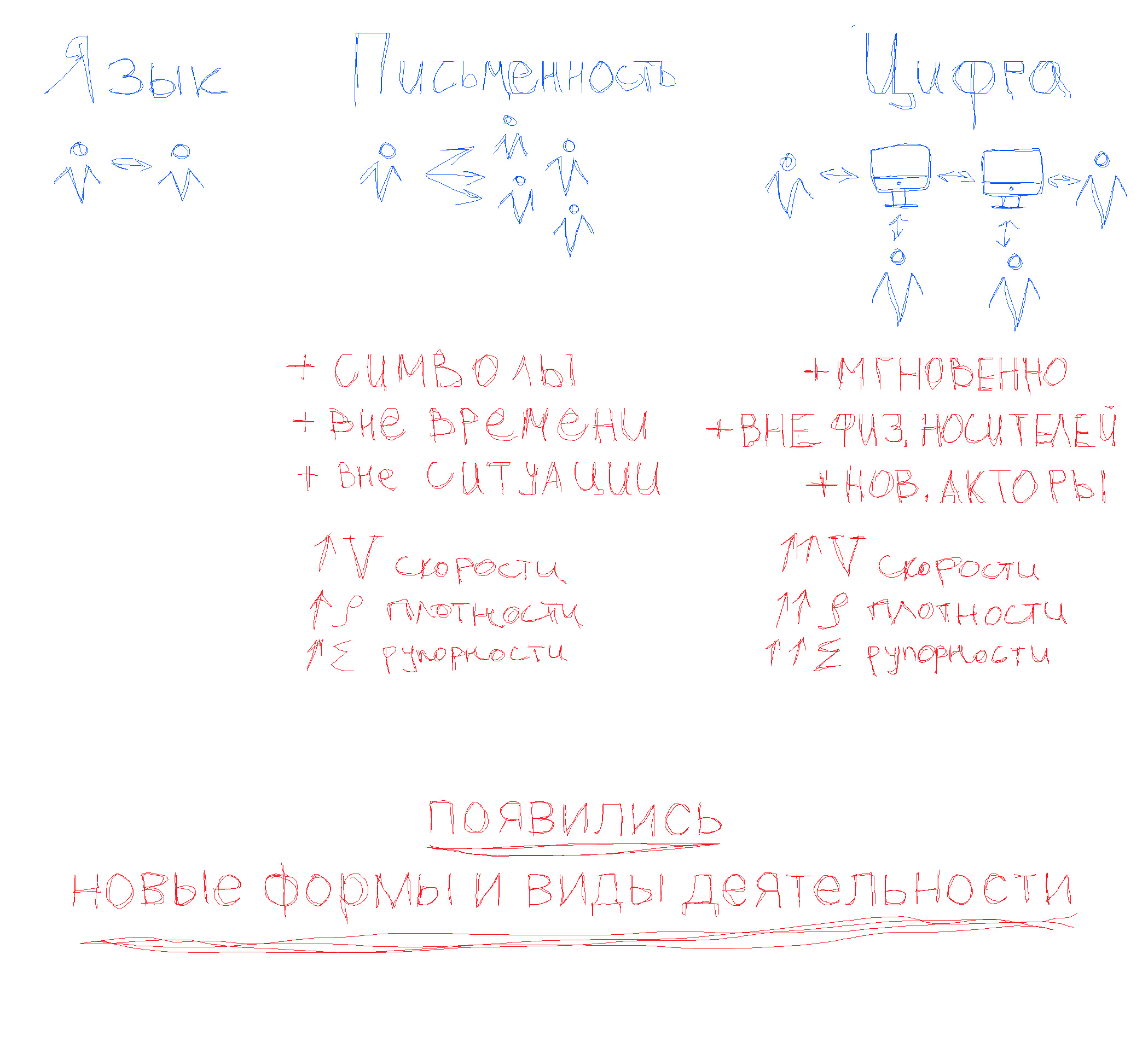
Whether it’s writing or digital, the goal of communication has always been the same – to share meaning. The speed, density, reach and number of actors involved in communication shape two key things:
- What kinds of activities are possible;
- What forms of organization can exist to support those activities.
We call a combination of these two things an activity model.
We call it a transformation when a new way of communicating leads to entirely new activity models. Digital technology has marked one of those turning points in society.
Problem framing
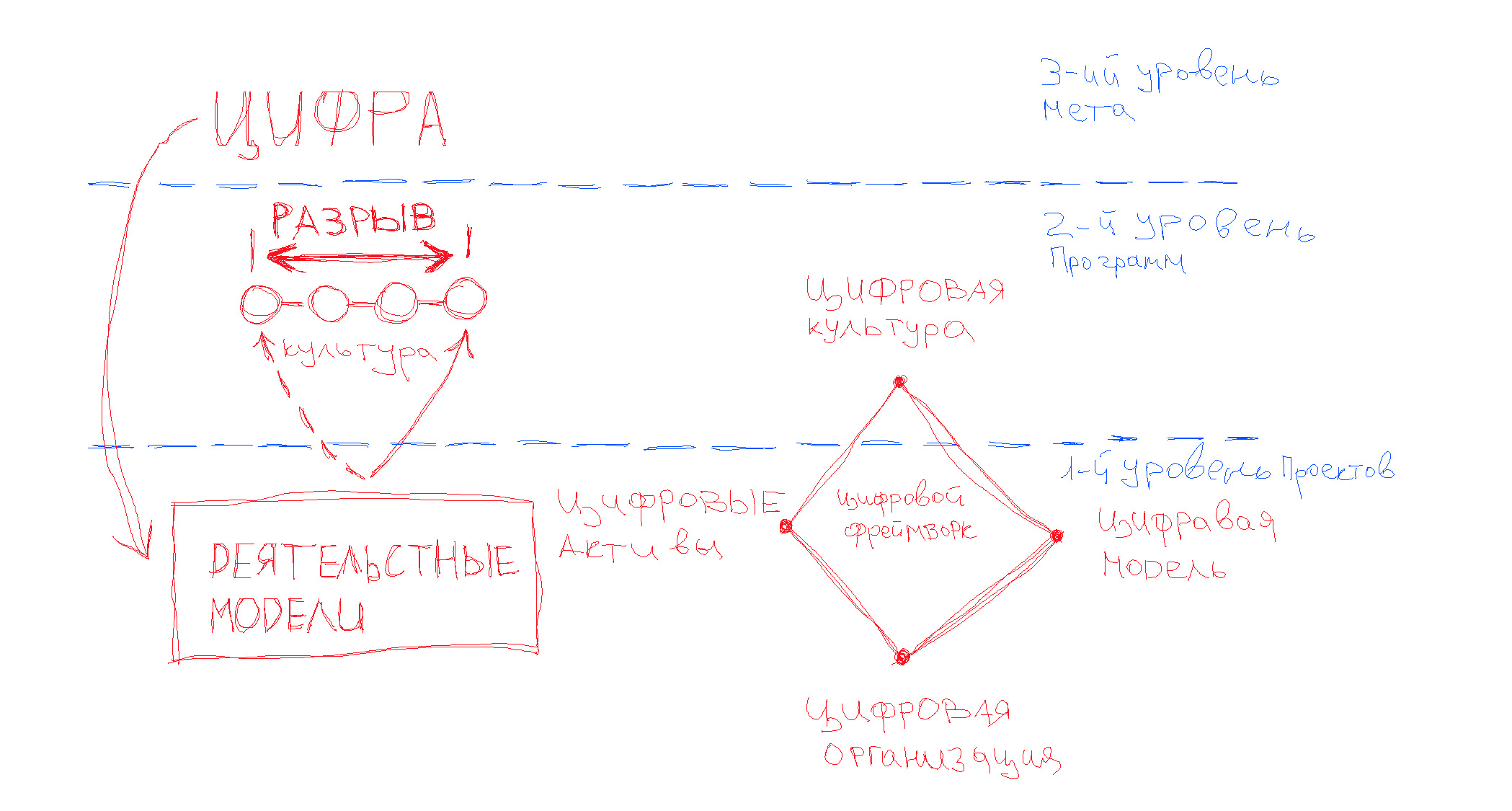
We place the idea of “digital” on the third level, the same level as religion, mythology and meaning. It’s a core concept, something foundational. The activity models it creates belong to the first level, the level of real-world projects. In between, on the second level, is culture. It connects deep ideas with everyday actions.
We also apply a digital transformation framework to this model. On the first level we find digital assets, digital models and digital organization. On the second level is digital culture – the focus of our studying.
We believe that digital technology led to new activity models and they’ve spread rapidly across all areas of life. But cultural change is happening much more slowly. That’s where we see the problem: the way we work has changed, but the culture to support this new way of working hasn’t fully formed. There’s a gap.
Our goal is to develop a method for transforming digital culture that can help bridge this gap.
July 2021.
The group also included: Ruslan Akhtyamov, Evgeny Oshchepkov, Sergey Chernobaev and Mikhail Milyokhin.