I built Biz-cen.ru , an office-rental proptech, and Lashoestring.com, a UK antiques e-commerce. I run a Telegram channel, in Russian. For contact — email. Writing from Berlin.

ENРУ
Later Ctrl + ↑

How to negotiate in uncertain situations

A right rule to make a great deal when you negotiate about price: for the seller — to name the highest real price, and for the buyer to start negotiation from lowest real price. The word ‘real’ in this context means that if any side claims an unrealistic (too low or too high) price other side might lose their interest in any further negotiation. To guess the right boundaries for the price each side tries to collect more information about the deal. For instance, it is easy for the buyer to propose for the seller the minimum real price for one kilo of apples if he bargains in the fruit market, because there is enough other sellers there, so anyone in this situation knows the real highest and lowest prices.

But what about situations, when nobody knows enough details to name a proper price? First of all, you need to collect any information about the future deal. So negotiation process, in such conditions, starts when each side presents its’ understanding of situation. And only then they start negotiating about the price. This is the trick! In the first round of a negotiation process you need to force the other side to look on the deal from your point of view, this is what you need to be worried about at first of all.

For example, you decided to start a company with your classmate. Neither your friend nor you do not know how to divide the ownership of the company. So you need to arrange a start point for negation. For instance, you choose the position that the one who invests more money get a bigger part of the company. And your friend’s position is that the one who invests more times during the first year of building the product needs to get a bigger assets. In this way, the first round of the negotiation is to make the believe the other side believe that your point of view on the deal is the right one. This round is the most important one. For example, you accept the position of your partner. From this moment he is in a better position:

  1. he had a better opportunity to think over his strategy in this position, than you did;
  2. as you do not know all his ideas, it will be a challenge for you to attack his position.
Sketch of two figures on mountain peaks labeled 1 round, and a second scene showing hidden information in 2 round.

Note here that in the situations when both sides of the negotiation process don’t know enough information to start discussing the price it is very important to win the first round and create the great foundation for a future victory.
Trip to London

I had a small trip to London, at the end of 2014. In my view, this city is more closer to St. Petersburg than to Moscow if we compare common sense of speed and life style of each city. I want to share some interesting details that I collect through my journey.

Transport

Public transport is very popular in London. Most cars on the street are cabs. It’s costly to have your own car there, because there is no enough parking places, moreover, taxes and petrol prices are quite high.

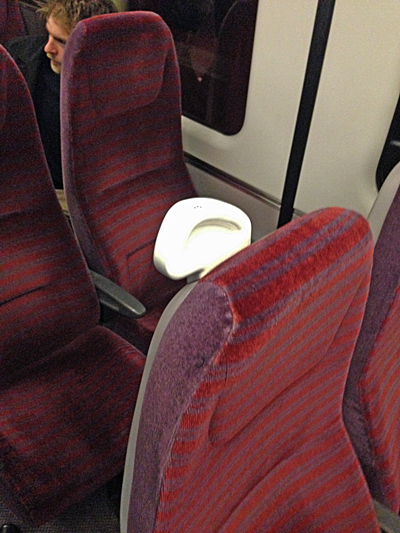
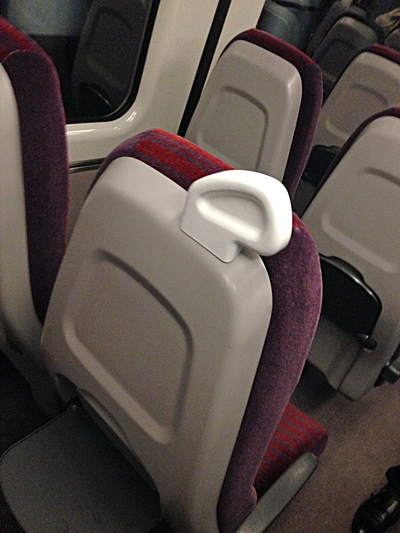
Interesting hand-rails in Gatwick Express on the way to Victoria station:

Close-up of train seats in dark red patterned fabric with a white plastic grab handle on the headrest Train interior with maroon patterned seats; a glowing white headrest catches the light, a passenger seated behind

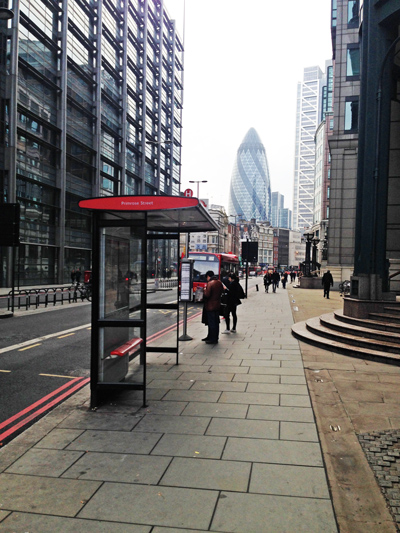
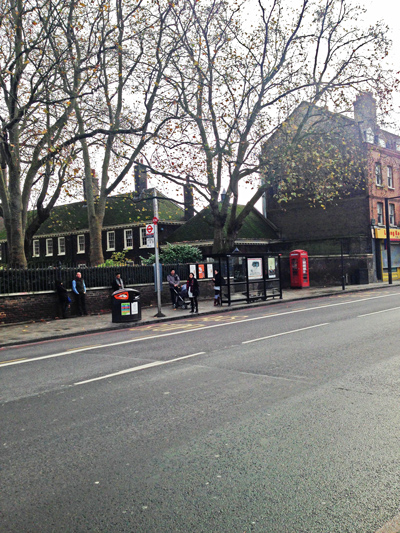
Perhaps, to save place for pedestrians, all bus stops have constructed in the way that their backs turned to the road:

London street with a bus stop shelter; the Gherkin skyscraper rises in the misty background London street with a bus shelter, red telephone box and bare autumn trees beside a brick wall

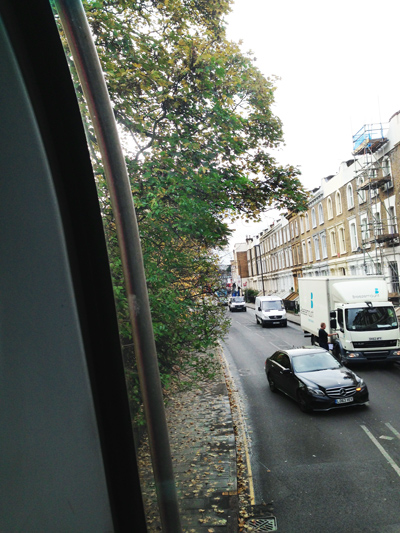
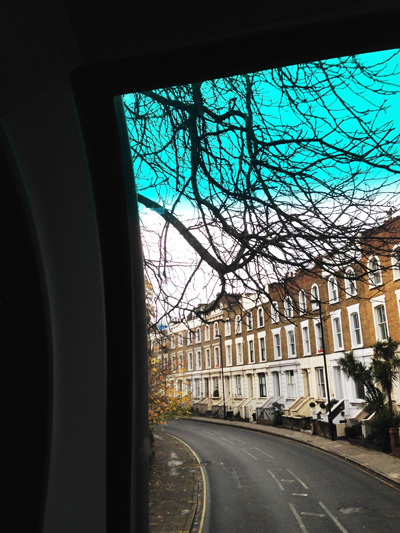
Double-decker buses cut branches of trees on their routs:

View from a bus window of a London street with a tree, parked van and passing black car View through a vehicle window of bare tree branches, terraced brick houses and a vivid teal sky

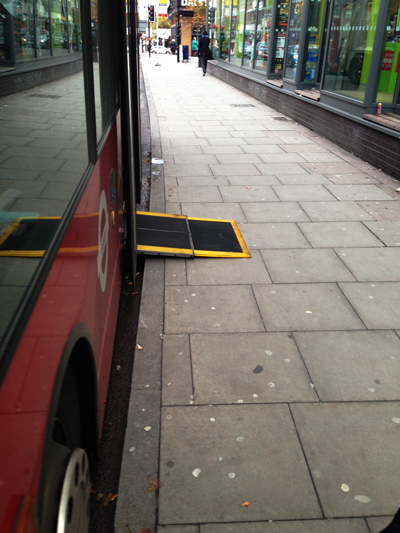
When person on a wheelchair wants to get into the bus. The bus stops in front of him, lowers the closest side to stand nearer disabled person and a small bridge appears.

A red London bus at a stop with its wheelchair access ramp folded out onto the pavement

Subway

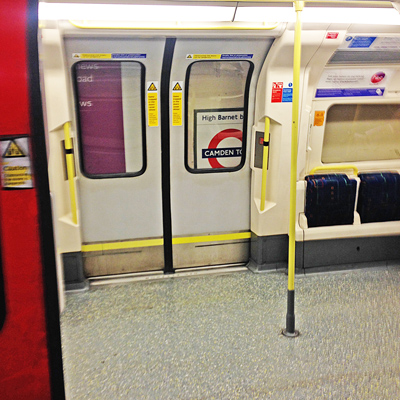
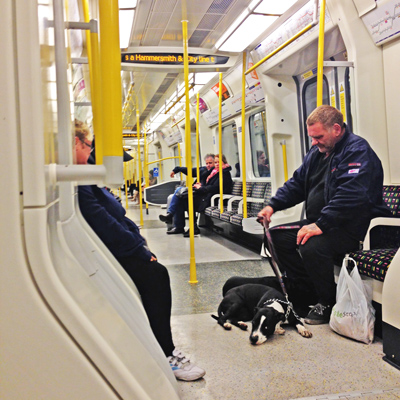
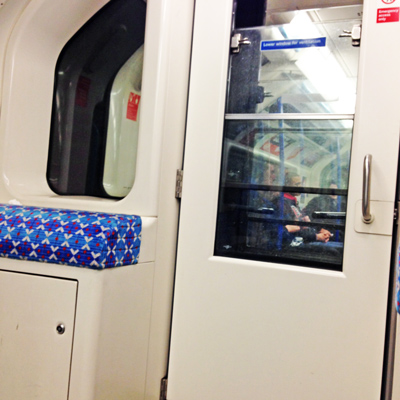
A ceiling in carriages is curved so passengers don’t stand in front of doors as they do in Moscow or St. Petersburg. Moreover, you can find a small standing seats at the beginning and at the end of each carriage.

London Underground carriage doors with a route sign reading High Barnet and Camden Town Inside a London Underground carriage; passengers seated and a man with a dog lying at his feet Tube carriage door and a seat upholstered in blue patterned fabric, passengers visible through the glass

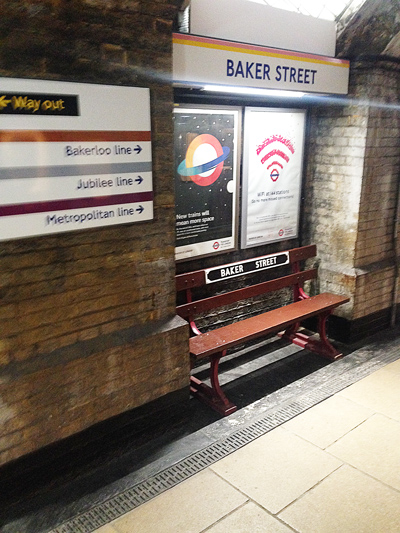
Everywhere in subway you can find different posters with an information about future changes in timetable, recommendations of how to reduce money for metro tickets or other announces.

Baker Street Underground platform with Way Out signs for Bakerloo, Jubilee and Metropolitan lines, and a bench

Details

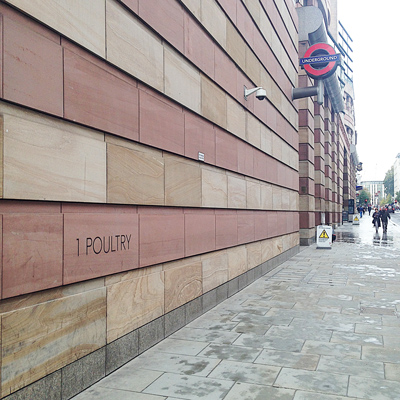
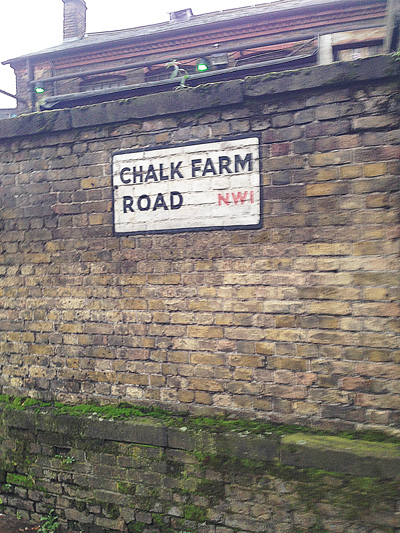
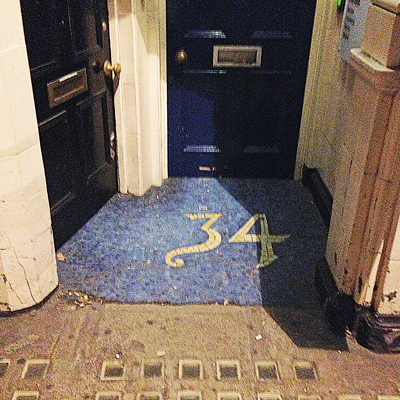
The are a lot of different small things that make this city so charming. One of such details is the way how they name streets or write warnings.

Stone-clad building wall inscribed '1 Poultry' with a London Underground sign on a wet street Street sign reading 'Chalk Farm Road NW1' painted on a weathered brick wall Doorway at night with the number 34 in yellow on a blue floor mat

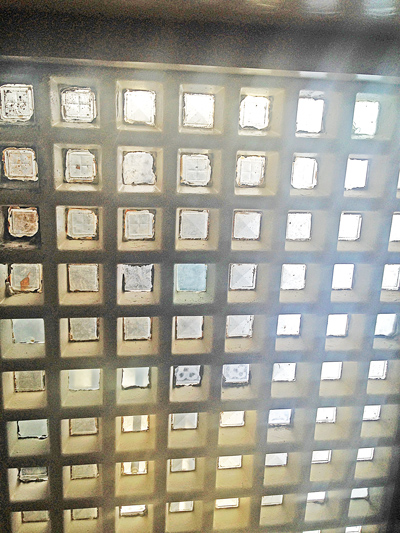
It is hard to guess what it is. By the way, it is a ceiling in Starbucks. Yeah, you can see pedestrians right over you.

Grid of glass blocks in a wall letting through daylight

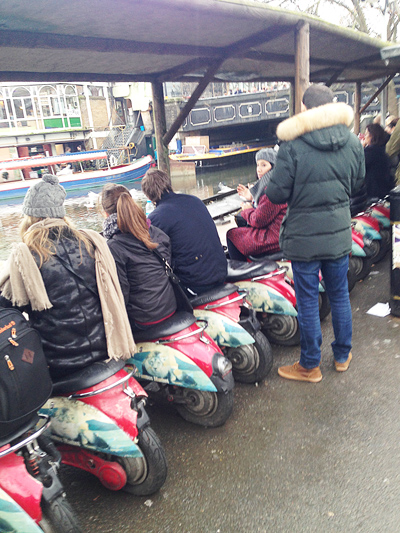
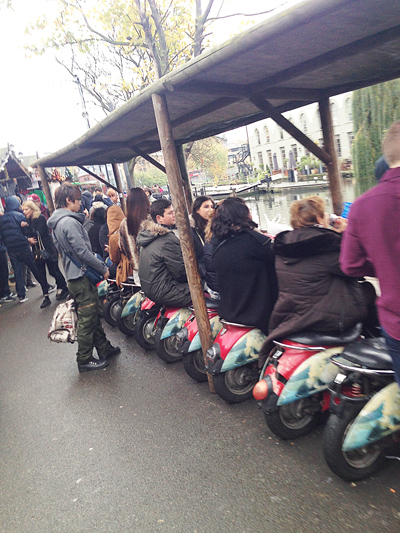
Dinner tables with scooters as chairs, along river shores at Camden Town market:

People sitting on a row of scooter seats beside a canal at Camden, houseboats and a bridge behind A crowd resting on a long row of scooters parked under a shelter beside a canal

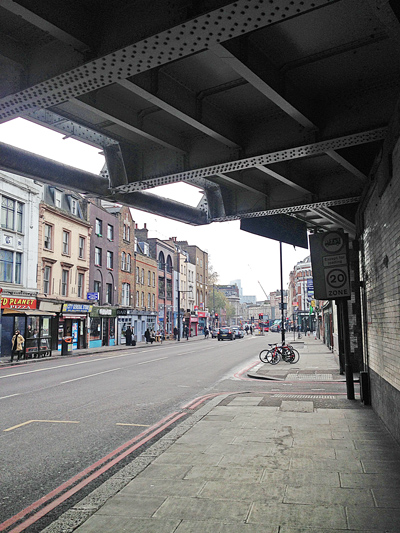
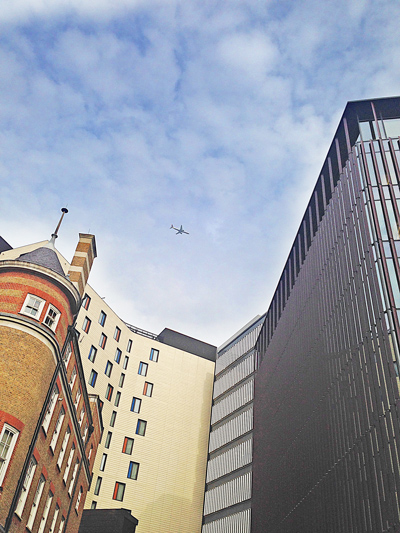
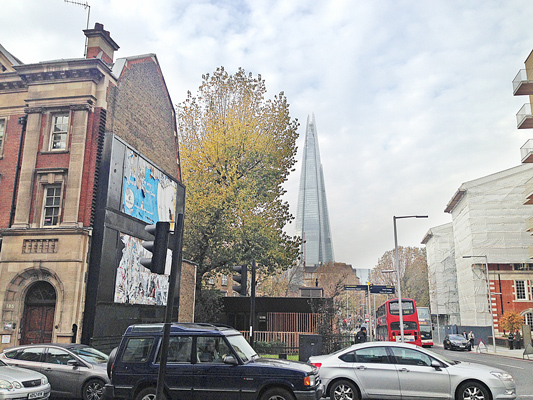
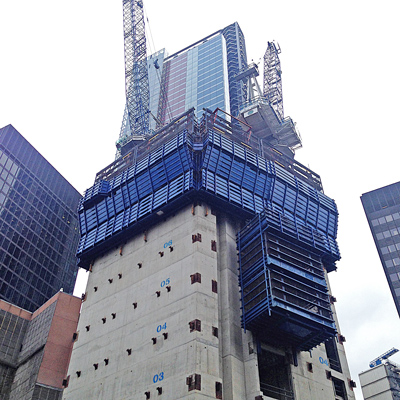
Other typical views of London:

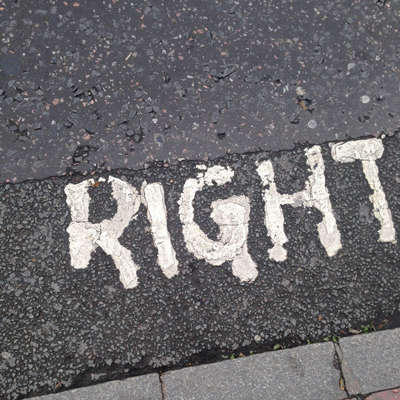
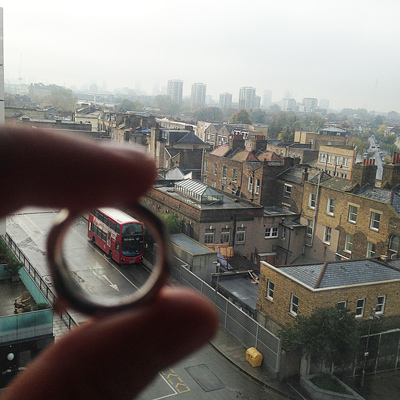
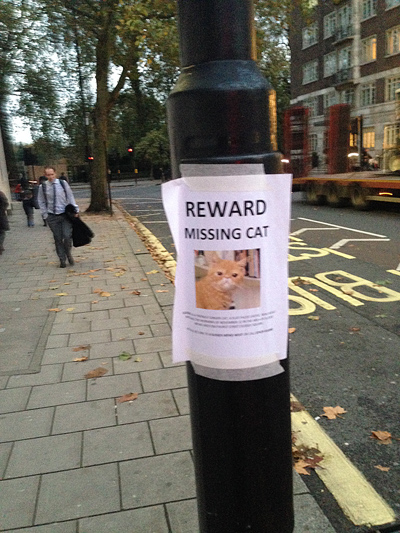
London street running under a steel railway bridge, lined with shops and a 20 mph zone sign Looking up between buildings at an airplane crossing a cloudy blue sky London street with The Shard rising in the distance, a mural on a wall and cars in the foreground A concrete skyscraper under construction with tower cranes and blue scaffolding The word 'RIGHT' painted in white on the asphalt of a road A hand holds a round lens showing an inverted view of a London street with a red bus A lamppost with a 'Reward Missing Cat' poster showing a ginger cat, on a city street

The limited ability to change place of living

When you change the place of living, you invest your energy to recreate infrastructure around you. If you change place within one city you still need to relocate all your staff, buy some things that you do not have there and choose the best way to find your job.

The amount of energy that you need for acclimatization when you relocate to another city is much higher. And each nation has it’s own capacity of such energy. In my view, Russians have lower level of it comparing to Americans or Europeans. Mostly, because there are only two cities in Russia that have something to offer for new settlers — Saint-Petersburg and Moscow. Furthermore, Russians do not have such habit to change cities often through their life.

From my point of view, if someone from Russia thinking about possibility to change place of living and would like to choose some city outside the country it is better to relocate there directly without any stops in another city.

The best quotations from Zero to One by Piter Thiel

I would like to share some quotations from Thiel’s book about startup’s journey:

As a good rule of thumb, proprietary technology must be at least 10 times better than its closest substitute in some important dimension to lead to a real monopolistic adventure.

The perfect market for a startup is a small group of particular people concentrated together and served by few or no competitors. Any big market is a bad choice, and big market already served by competing companies is even worse.

The most successful companies make the core progression — to first dominate a specific niche and then scale to adjacent markets — a part of their founding narrative.

As you craft a plan to expand to adjacent markets, don’t disrupt: avoid competition as much as possible.

In this one particular at least. business is like chess. Grandmaster Jose Raul Capablanca put it well: to succeed, “you must study the endgame before everything else”.

Far more important are questions about the future: is it a matter of chance or design?

To a difinite optimist, the future will be better than the present if he plans and works to make it better.


What is more, in one of chapters, you can find an interesting moment about gender of founder: “An entrepreneur makes a major investment just by spending her time working on startup.”

There is no intuition without knowledge

Most time of a day you act in situation where you can predict consequences of each of your movement. In such situations you usually use your mind only to choose the better algorithm to get a result. What is more, when you face with some problem, you can predict the outcomes of your acting with great probability.

Things change, when you get into situation where the complexity of situation is high and you have two or more decision that you can choose between. In such situation you probably will use your intuition to choose one of them. Your decision in such condition will be as great as your formal knowledge of the area of such problem.

For example, you can’t make a decision based on your intuition, what move in chess game is greater, if you do not know how to play them. The only way, to grow your intuition is to learn rules of this game. Furthermore, if you want to build a strong intuition you need to know more about the area where you can face with ambiguity situation. By the way, if you already know basic rules of how to play chess, it might be effective for you to gain knowledge in psychology. It can help you to choose the better game tactic to fight with your opponent. Hence, be smart once you are thinking about improvement of your intuition.

Earlier Ctrl + ↓