
You could start from the idea that everything in the world is connected and everything affects everything. So when we try to really understand something, we have to look at it in a broader context.
But here’s another way to look at it. If we’re going to talk about a specific term, we need to define its boundaries clearly. Say “this is white and this is black.” Everyone joining the conversation should be on the same page about what we mean, so we’re not arguing about definitions, we’re agreeing on them first.
Let’s break down the difference between information, understanding and knowledge. Then we’ll look at how the digital age has changed what these words mean and how it’s reshaped the way we work and organize what we do.
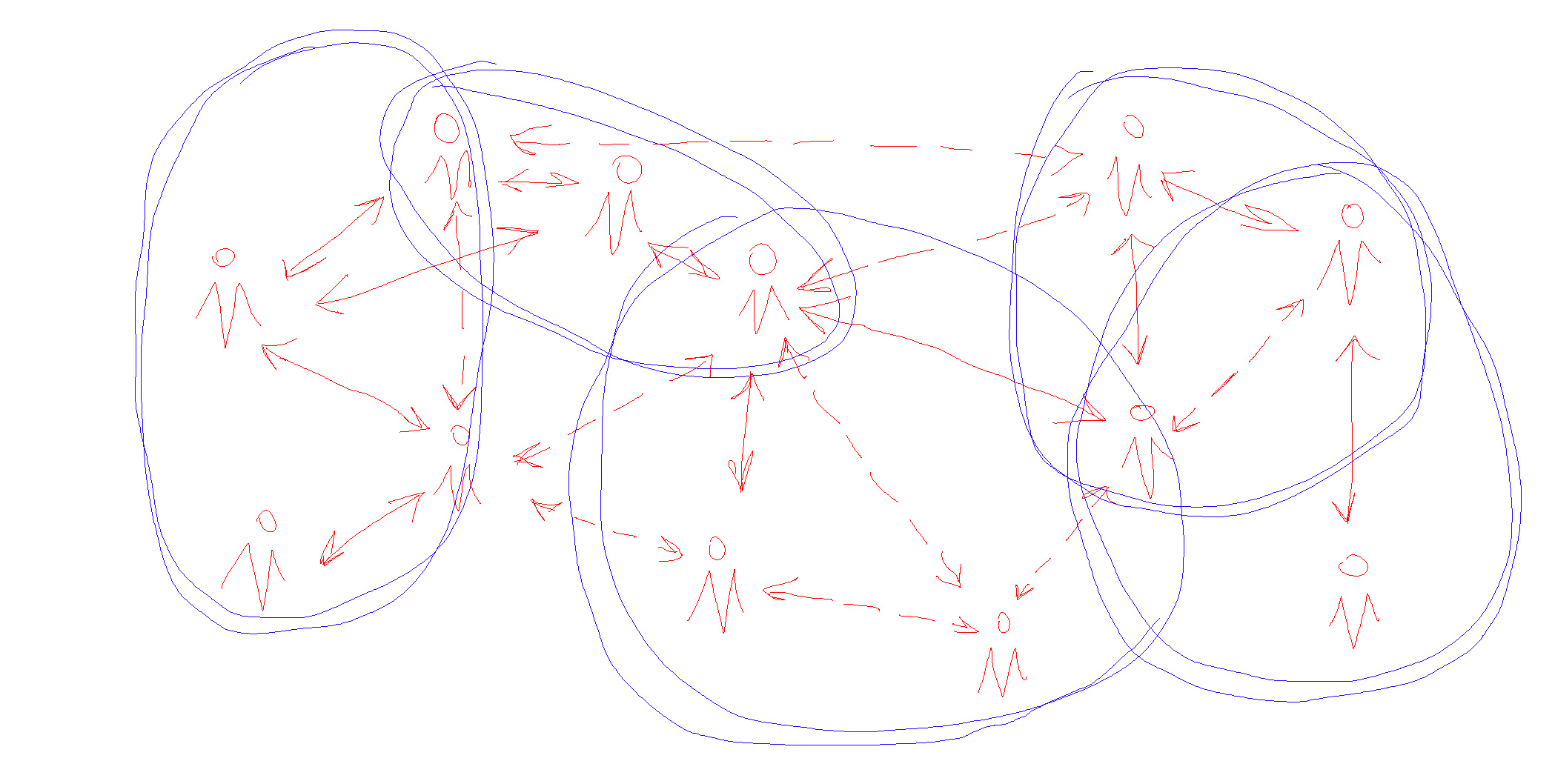
Definitions of information, understanding and knowledge. And how are they connected?
You can break down communication into three steps:
A. First comes the transfer of information, spoken or written. That’s the basic act of communication.
B. Then, the person receiving that information filters it through their own context. They start to form an understanding of how to act in a way that might lead to a positive outcome. This is where information becomes personal. That’s why you can tell a group of people the same thing and they’ll each walk away with a different takeaway, because they process it through their own lens.
C. Finally, the person takes action. They do something based on their understanding and the results of that action or lack of results turn into real knowledge. That’s the key: knowledge doesn’t exist without action. It’s something we gain through doing.
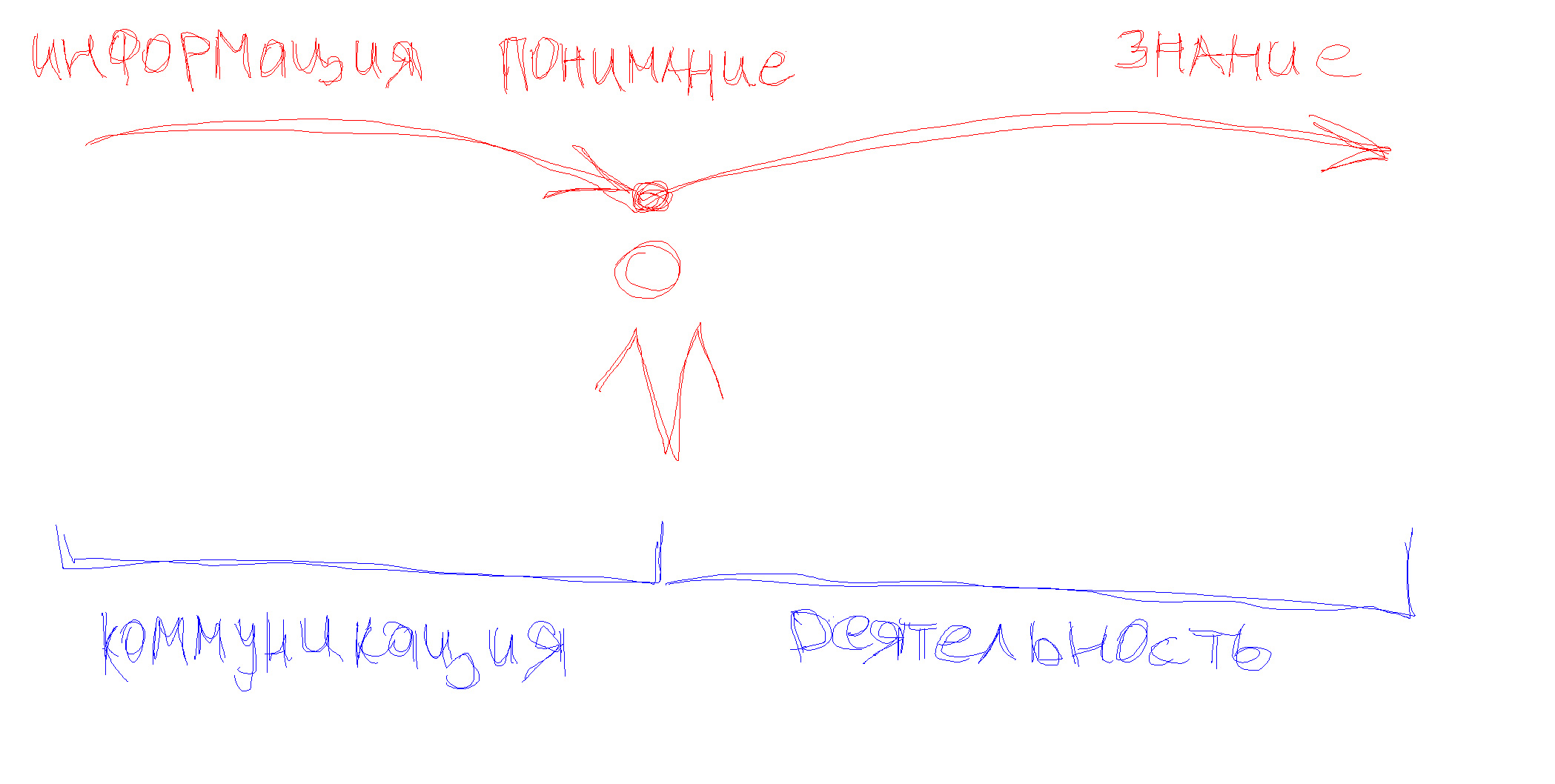
Information is data about the world around us, passed along through communication.
Understanding is the meaning we personally assign to that information as we process it.
Knowledge is the experience we gain through action, it’s knowing what actually works in a specific situation.
How digital changed information and understanding?
On the information level:
The amount and speed of access to information have exploded. Now anyone can create and share it, since the cost of producing and distributing information has dropped dramatically.
On the understanding level:
Understanding often comes from information that’s structured like a clear, step-by-step guide. Digital tools have massively sped up how fast we can find those kinds of instructions. So now, thanks to tech, people can build understanding across way more areas than ever before.
Which means the number of areas where someone can start building their understanding has grown dramatically.
How digital changed knowledge?
On the knowledge level digital has brought the biggest changes. The important one is that we’ve started to lose the skill of acting in the unknown. These days, if there’s no step-by-step guide, people often just don’t know what to do.
Let’s take a look at how people worked with knowledge before the digital age:
There was a guy named John who lived in a village. He wanted to know how to grow a good potato harvest. His father passed down some knowledge like planting only the bigger potatoes. He also read in a book that you shouldn’t fertilize right before planting, but in the fall, after the previous harvest.
That was the extent of what John knew about planting. Those first two steps were within the bounds of what others had already figured out. He hit the limits of other people’s experience pretty quickly.
If John wanted to improve his potato harvest, he had to start experimenting. That meant stepping into the unknown. He had to figure things out for himself like what to do during a dry season or how to handle it when it rained nonstop.
Some of his ideas failed, others worked. And that’s how it used to go in the age of books, before the digital world took over. Gaining knowledge had two key features:
- Whatever area John decided to explore, he quickly picked up all the available knowledge within the “known” and hit the edge of the “unknown”.
- He often ended up in the “unknown” and had to figure things out by testing his own ideas.
With the invention of writing, the amount of information grew, people could finally store and pass down what they knew about the world. But it was digital technology that truly exploded the amount of information we have. That massively expanded the boundaries of the “known” world we live in. And that changed everything, now people can spend their whole lives staying within the “known” without ever needing to step into the “unknown”.
With digital you can spend your whole life learning a single field, even something like farming and still never reach the edge of the “known”. Most of the time you’re just following instructions, because it’s now so easy to find information that fits your exact situation.
To act in the “unknown” you need to be able to handle the emotional weight of trying things that don’t work out. But if you’re always following ready-made instructions, that kind of emotional resilience doesn’t develop. So stepping into the “unknown” feels not just unfamiliar, but uncomfortable too.
Conclusion: The skill of gaining new knowledge has weakened, because gaining new knowledge means testing hypotheses, some of which won’t lead to the best result. But thanks to easy access to information, people have gotten used to always following instructions that guarantee a positive outcome.
P.S. At the knowledge level, other important changes are happening too. Let’s list them without going into detail:
- To reach the edge of the “unknown”, where new knowledge can be created, now takes more time for an individual. That’s led to a rise in specialization.
- The value of easily repeatable knowledge has gone down, while the value of being able to synthesize knowledge has gone up.
- Competition between companies has become less about quantity and more about quality.
November 2021
This text was created as part of the work done by the “Digital” group. The group included Ruslan Akhtyamov and Evgeny Oshchepkov.