
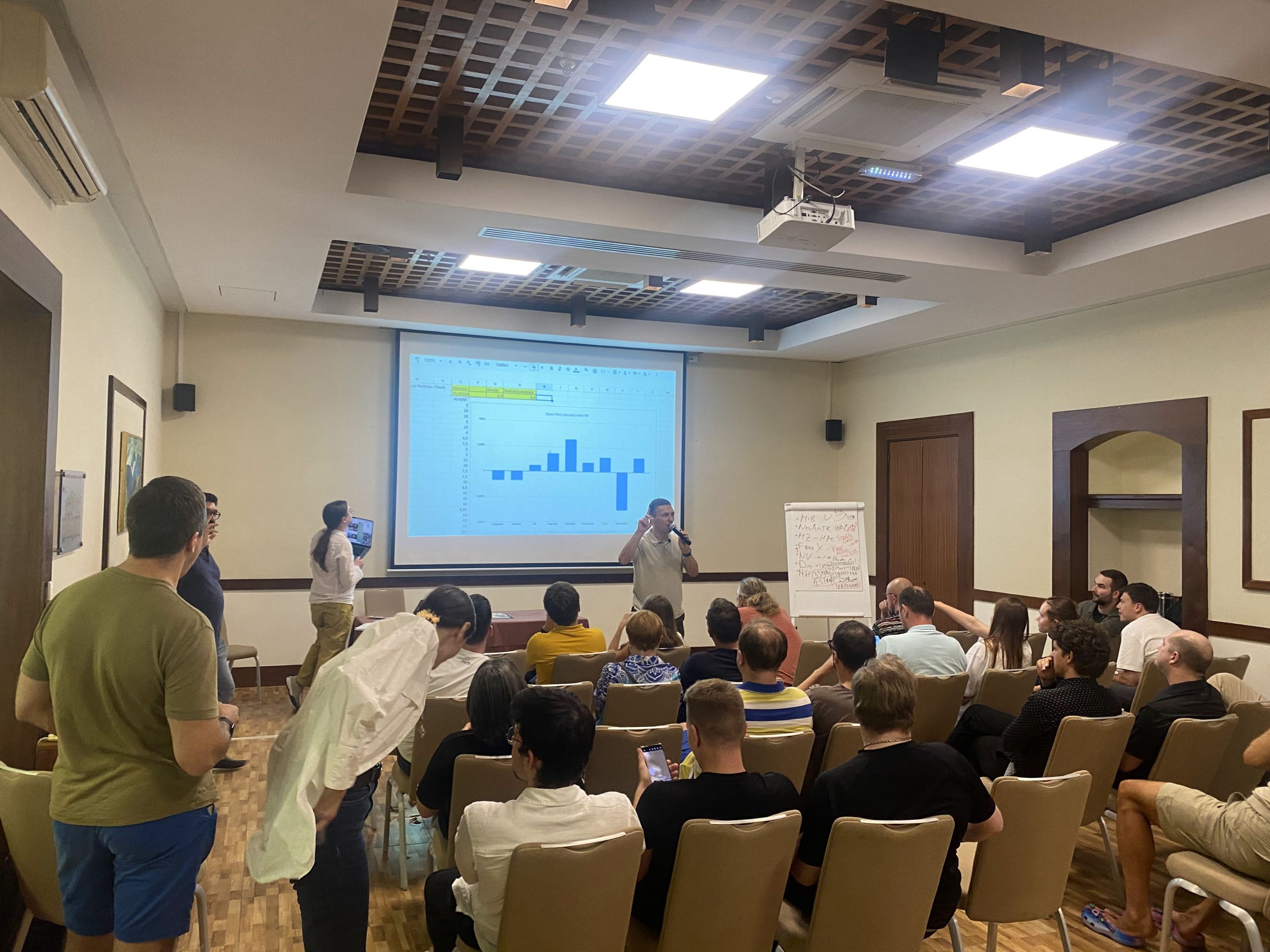
At the weekend, we spent two days on a simulation all about how AI might evolve over the next five years. There were 36 players involved. The game itself is a test and workout for skills like leadership, dealing with uncertainty, negotiation, building coalitions and cascading teamwork. Last year, I took part in a similar simulation, but that one focused on a geopolitical conflict.

Here’s how the game worked
Everyone was split into teams, each representing a key player in the market:
- Established IT leaders – companies like Google, Microsoft, Meta and Alibaba;
- AI startups – like Anthropic and OpenAI;
- Chipmakers – companies like IBM and Nvidia;
- Venture investors – GP and Standard Investments;
- Conglomerate – X, led by Musk;
- Regulators, the press and the courts.
35 people were split into teams and each person got assigned a role with details like personal goals, company status, industry position, team relationships, company ownership percentages, etc.
Each team member had their own “stats” like the number of people on their team, computing power, budget, accounts receivable and more.
There were 5 rounds, each lasting about an hour and a half. You could do pretty much anything: lure talent away from other companies, sue someone or get regulators involved, raise funds to build new factories to boost computing power. Any move was allowed, but moderators, the court or regulators could step in and veto an action.
At the end of each round, all the agreements made were handed over to the moderator, who compiled the results into a spreadsheet for each company. The spreadsheet tracked key stats that changed during the round, covering everything from team size to available cash.
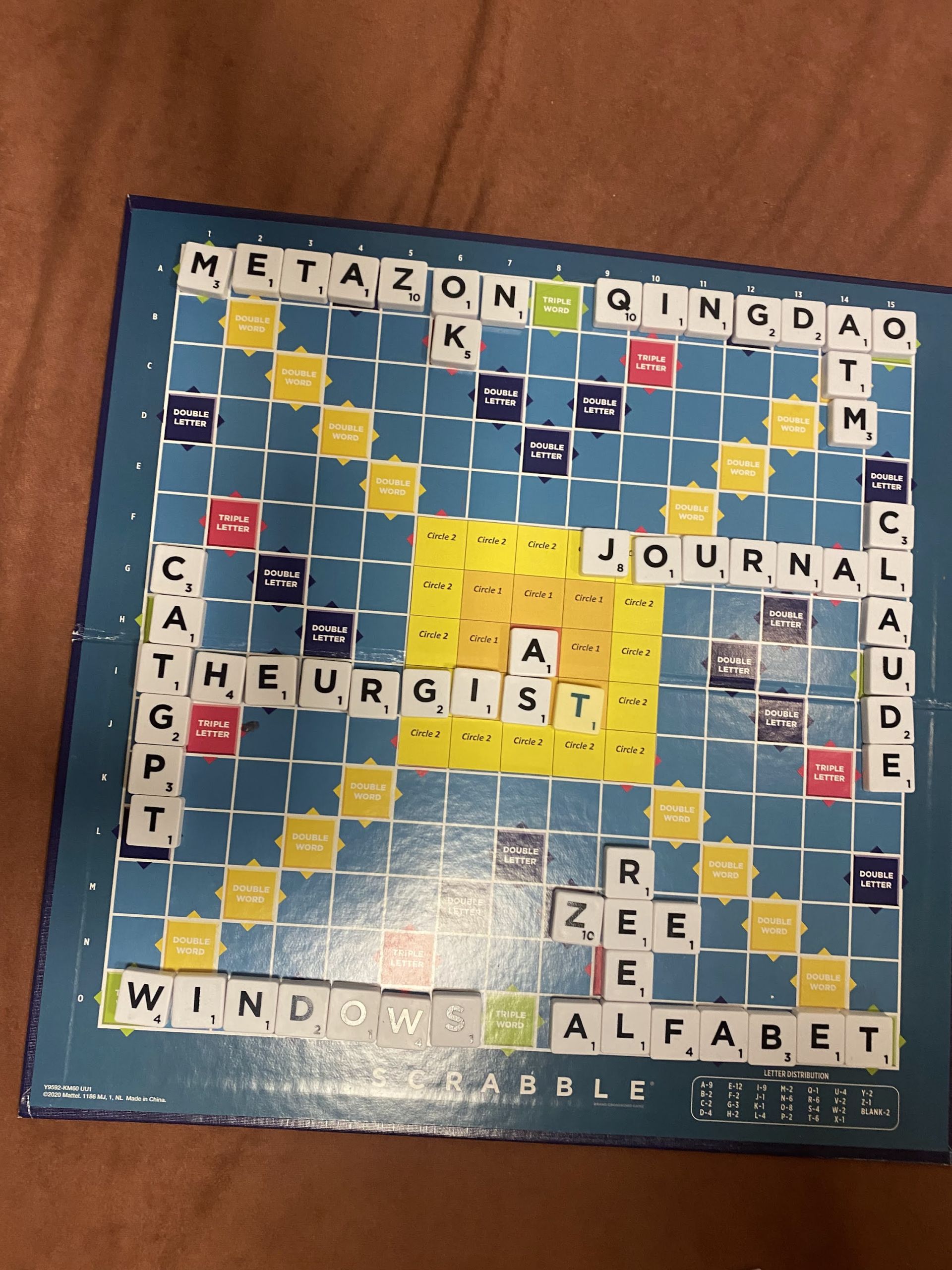
The main goal for each team was to reach singularity, they used a Scrabble-like mechanic for that. At the end of each round teams got letter tiles, the number of letters depended on team size and computing power. But the exact formula of how letters were awarded was a secret, known only to the organizers and it wasn’t a straightforward calculation.
Post-game takeaways
1. The role you got is just a formality.
My role was a team lead at a company like OpenAI, not a top position. When I started negotiating with other teams, they asked what my position was and if I could make decisions. But I explained I was there representing the team and my role didn’t really matter. Very good. When it came time to run for president, I thought, there are already bigger names in the game, like Musk, so why even bother? Roles are just labels, both in the game and in real life. But it’s easy to use them as an excuse.
2. Always lead, always.
At the start of the game, we spent way too much time explaining what everyone planned to do. But as soon as we nailed down a clear vision of the goal and just got moving. Coming in with a plan and sharing it with the team really helped. I think the long talks happened because people were afraid to work with other teams and didn’t want to take responsibility alone. They wanted to share it so no one felt fully in charge.
3. If you don’t get the result you want, don’t overthink it – keep going.
When my or the team’s actions didn’t pay off, I got caught up in my emotions. But a few times when I pushed through and made an extra effort, things surprisingly turned out well. I’m more convinced than ever that keeping a cool head gets you results faster.
4. Look at your social connections before you start and use them.
At the start of the game only three teams had computing power. The first two teams I asked didn’t want to work with me. But the third team had someone I already knew and they agreed to cooperate. I’m sure the trust we built before the game helped a lot. You should use this kind of trust and manage it, both in the game and in real life.
5. Keep the whole game in mind while working on the current round.
It’s normal to want quick, predictable results. But if you only focus on the short term, your options get limited. When you plan for the long game, looking ahead several rounds, you open up more possibilities and better chances to succeed. For example, we started building a coalition in the first round and didn’t finish it until the third, but that gave us a lead over the other teams.
6. When things are uncertain, focus on finding opportunities.
In uncertain situations with lots of different interests, it’s easy to just stick to your own goals – your role makes them clear and it feels simpler that way. But if you pause for a second, you’ll see everyone starts like that and the only way to win is by working together. So from the very beginning, look for chances to boost both your position and the other team’s. In the end, the team that began building a coalition right from round one won.
7. First, get the context – then take action, but don’t take too long.
The roles and rules are detailed and you get all the info just before the game starts, so it’s impossible to understand everything right away. My team spent time trying to figure it all out, but we ended up talking too much and wasting time we could use to do something. You learn the context by engaging with others, not by staying stuck in your own little world.
8. Keep taking action until you get a confirmed result.
When several teams are involved in a deal, it can feel like you’ve already agreed and can move on to the next step. But deals have fallen apart more than once right at the signing. So until the agreement is actually signed, don’t get distracted, follow through all the way to the end.
9. Split up the responsibilities.
More than once, our whole team went to negotiate with another group, all of us listening at the same time, which wasn’t very efficient. In the game, just like in real life, there are lots of tasks and layers to handle. To work better, it’s smarter to divide the responsibilities and work on things at the same time. On the second day we did that and our team got way more efficient.
10. Stay in sync and make sure everyone’s on the same page.
When signing some deals, it turned out that key people had different ideas about how things should work and that ended up breaking the deal. The main points and strategy need to be clearly explained from the beginning.
Thanks to Marat Atnashev, Timur Atnashev and their team for organizing the game.